What Passeggiata Means and Why Evening Walks Still Matter
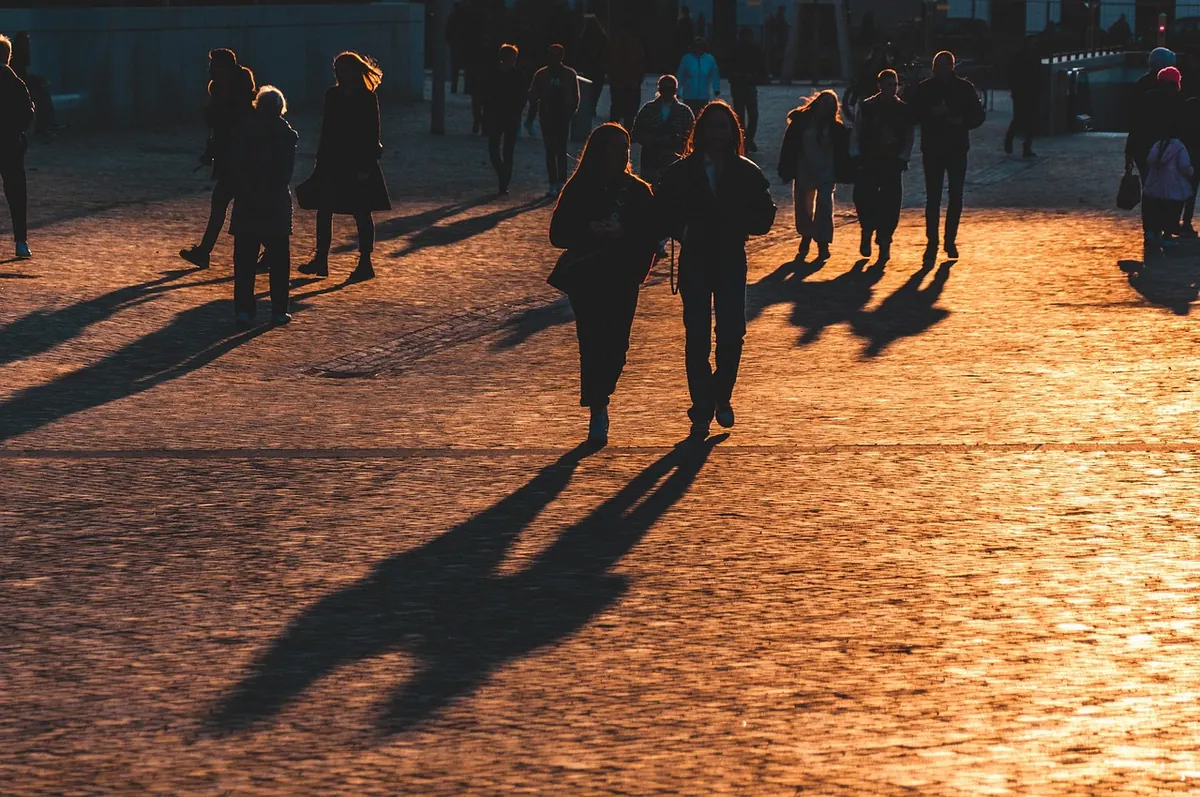
At around six in the evening, something shifts in an Italian town. Shutters lift, chairs appear outside bars, and the street that was empty at four starts to fill with people who have no particular place to be. They walk to the end of it, turn around, and walk back. Then they do it again, slowly, greeting everyone they pass. That, more or less, is the passeggiata — and it is one of the few social rituals left that asks nothing of you except that you turn up and take your time.
The word: a walk with no destination
Passeggiata comes from passeggiare, to stroll, and it describes a very specific kind of walking. It is not camminare, the walking you do to get somewhere. Nobody makes a passeggiata to buy milk, catch a train or hit a step count. The route is short, often circular, and repeated. The point is the going, not the arrival.
Italians have a whole vocabulary of smallness for it. You might be invited to fare due passi — to take two steps — or told that someone is just out for a passeggiatina, a little stroll, the kind that follows a long Sunday lunch. The diminutive matters. It signals that nothing serious is happening, which is exactly what makes it pleasant.
Where the ritual came from
The passeggiata is not ancient, not in its current form. It took shape as Italian towns grew and filled in the nineteenth and twentieth centuries, when the main street and the piazza became the shared ground where neighbours, generations and social classes actually overlapped. Homes were small and often hot. The street was free, and in the evening it was cool.
The piazza as a second living room
Before television, before most families had a car, the evening walk was how information moved: who was engaged, who had found work, whose son was back from the city, whose shop was closing. It still does some of that work in smaller towns, where the walk functions as a low-effort version of a village noticeboard.
The street as a stage
The walk has always had an element of display, and pretending otherwise is a mistake. It is where a new coat, a haircut, a baby, a fiancé or a visiting cousin gets shown to the neighbourhood. Seeing and being seen are both part of the deal. That is not vanity; it is maintenance. A community that never looks at itself tends to stop noticing who is missing.
It has faded in some places and come back in others. In big cities it often survives in altered form — a riverside circuit, a neighbourhood loop, an evening aperitivo that stands in for the walk itself. In small towns it can still look almost unchanged.
Why the hour before dinner works so well
The timing is not accidental. The passeggiata sits in the gap after the working day and before the evening meal, usually between six and eight in summer and closer to five in winter, when the light goes soft and the heat finally lifts. Shops reopen after the midday break; bars start filling; the street gets its second life of the day.
What the ritual provides is a buffer. Anyone who has finished a working day at a screen and gone straight to the fridge knows the shape of that problem. Twenty minutes of walking, greeting and being greeted separates one part of the day from the next in a way that a commute used to do by accident. The walk ends at the table. That is the architecture of it.
What actually happens on a passeggiata
If you stand still for ten minutes and watch, the pattern is easy to read:
- A short, repeated route. Two or three streets, up and back, often the same one every evening.
- Constant, brief greetings. A nod, a buonasera, two cheeks or a handshake, depending on the region and the relationship.
- Deliberate slowness. No headphones, no power-walking, no lycra. People dress a notch above what the errand requires.
- Stops. A coffee taken standing at the bar, a gelato, a bench, a conversation that lasts twenty minutes in the middle of the street.
- Children running ahead, grandparents parked on benches, dogs greeting each other. The walk is one of the few spaces where all ages are out at the same time.
How to join without getting it wrong
Visitors are welcome, and locals are usually pleased when someone takes an interest. A little care goes a long way.
- Learn the loop first. Walk it once without stopping. You will quickly see where people turn around and where they gather.
- Go at the right hour. Ask at your hotel or alimentari what time the street fills; it varies by town and season far more than guidebooks admit.
- Dress up slightly. Clean shoes, a proper shirt, nothing that looks like gym kit. This is the single most reliable way to look like you belong.
- Slow down. Half your normal walking pace. Stop when someone stops.
- Keep your voice low and your phone in your pocket. A passeggiata conducted through a screen is not a passeggiata.
- Greet people. Buonasera with a small nod covers almost everything. In a small town, greet the shopkeepers too.
- Ask before photographing anyone. Especially children, and especially in a place where the same faces appear every evening.
- Buy something small. A coffee, a piece of fruit, a gelato. The walk and the local economy have always been tangled together.
A few words for it around the country
The standard term travels everywhere, but local names are worth listening for. In Naples, and in parts of Rome, the evening walk is lo struscio — literally the rubbing — for the way the crowd brushes past itself in a narrow street. Elsewhere people simply talk about il corso, the main street, and going sul corso, as if the street were the event. You will also hear il giro, the round. None of these are interchangeable, and locals will tell you so. Ask what they call it and you will get a small, free lesson in how the town sees itself.
Start one where you live
You do not need Italy, a piazza or a good coat to borrow the shape of this. Pick a short loop near your home — fifteen to twenty-five minutes, ideally with a bit of life on it. Fix a time, ideally before dinner two or three evenings a week, and keep it. Leave the headphones at home and put the phone away. Dress as though you might run into someone you know, because eventually you will. Greet the people you pass, even the ones who look startled; the second week is easier than the first. Stop once, briefly, somewhere with a bit of bustle.
The passeggiata survives because it is cheap, repeatable and quietly useful. It costs nothing, it requires no equipment, and it makes a street feel like a place where people live rather than a route between two points. Walk it a few times and you will notice the thing that locals have known all along: the walking is only half of it. The other half is who you meet on the way.
Photo: wal_172619 / Pixabay